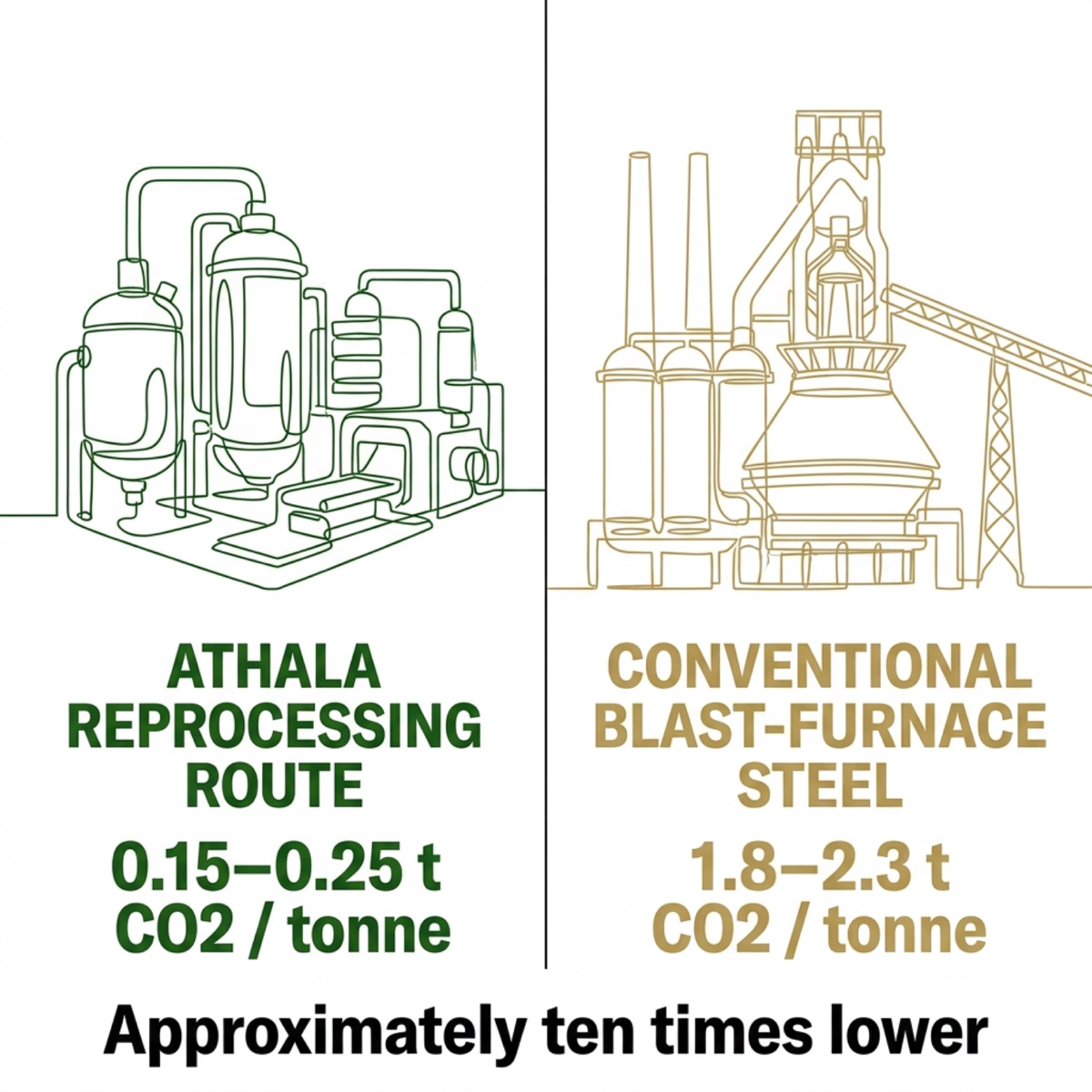
ATHALA develops and commercialises a portfolio of metallurgical and hydrometallurgical patent families — engineered to turn mine tailings, slags and process residues into recovered metals, lower closure liabilities, and durable licensing revenue.
Decades of mining and metallurgy have left billions of tonnes of tailings and residues behind dams and in legacy stockpiles — carrying environmental liability, regulatory exposure, and unrecovered metal value at the same time.
Tailings storage facilities now carry multi-billion-dollar closure reserves and tightening governance under the Global Industry Standard on Tailings Management (GISTM).
Copper, rare earths, uranium and critical-metal content remains locked in residues that conventional flowsheets were never designed to recover.
Reprocessing residues at scale is gated by reagent cost, which conventional routes consume rather than recover.
Estimated global tailings and residue inventory — growing every operating year.
Major operators reporting against GISTM disclosure on their tailings facilities.
Order-of-magnitude single-operator closure reserve illustrating the scale of liability at stake.
ATHALA combines a materials core and a process-chemistry core. Each stands alone commercially — together they cover both the recovery of value from residues and the wear-resistant equipment that handles them.
A regenerative leaching architecture that recovers and recycles its process reagents in a closed loop — collapsing the reagent cost that gates residue reprocessing and unlocking metal recovery from tailings, red mud and complex ores.
A proprietary metallurgical route yields a carbide-reinforced wear-resistant alloy reaching up to 70 HRC — tungsten-carbide-class surface performance at a fraction of the cost.
ATHALA exists to convert fragmented, founder-held inventions into a single investment-grade, transactable asset — clean title, international protection, and a clear commercialisation path.
Founder, institutional and corporate ownership unified into a single holding structure with clean chain-of-title and assignment deeds.
A staged filing programme (PCT and regional phases) extends protection beyond the home jurisdiction ahead of competing priority.
Trademarks, trade-secret governance and freedom-to-operate analysis reinforce the portfolio's defensibility.
Sequenced proof-of-concept and pilot programmes with industrial partners turn lab results into bankable, referenceable performance.
Two cores addressing distinct buyer pools — equipment makers and metal producers — diversify the revenue base.
An international holding vehicle structured for cross-border licensing, royalty flow and institutional investment.
ATHALA engages the operators who carry the liability and the manufacturers who supply the wear parts — across copper, alumina, and critical-metals value chains.
Reprocessing of copper tailings and concentrator residues to recover contained metal while reducing the active tailings footprint.
Bauxite-residue (red mud) valorisation — metal recovery and volume reduction of one of industry's most persistent residues.
Selective recovery of rare earths and critical metals from polymetallic tailings and complex residues that defeat conventional routes.
Licensing of the wear-resistant alloy for mill liners, hardfacing and weld overlay — a wear-resistance class above incumbent castings.
ATHALA is structured as an IP-development play: limited capital intensity, multiple independent licensing paths, and a clear five-year route to an enterprise value supported by royalty economics — not a single-site capex bet.
Detailed financial projections, valuation and capital plan available in the data room under NDA.
Whether you operate a tailings facility, supply wear-resistant equipment, or invest in industrial IP — we'll share the technical brief and commercialisation roadmap under NDA.